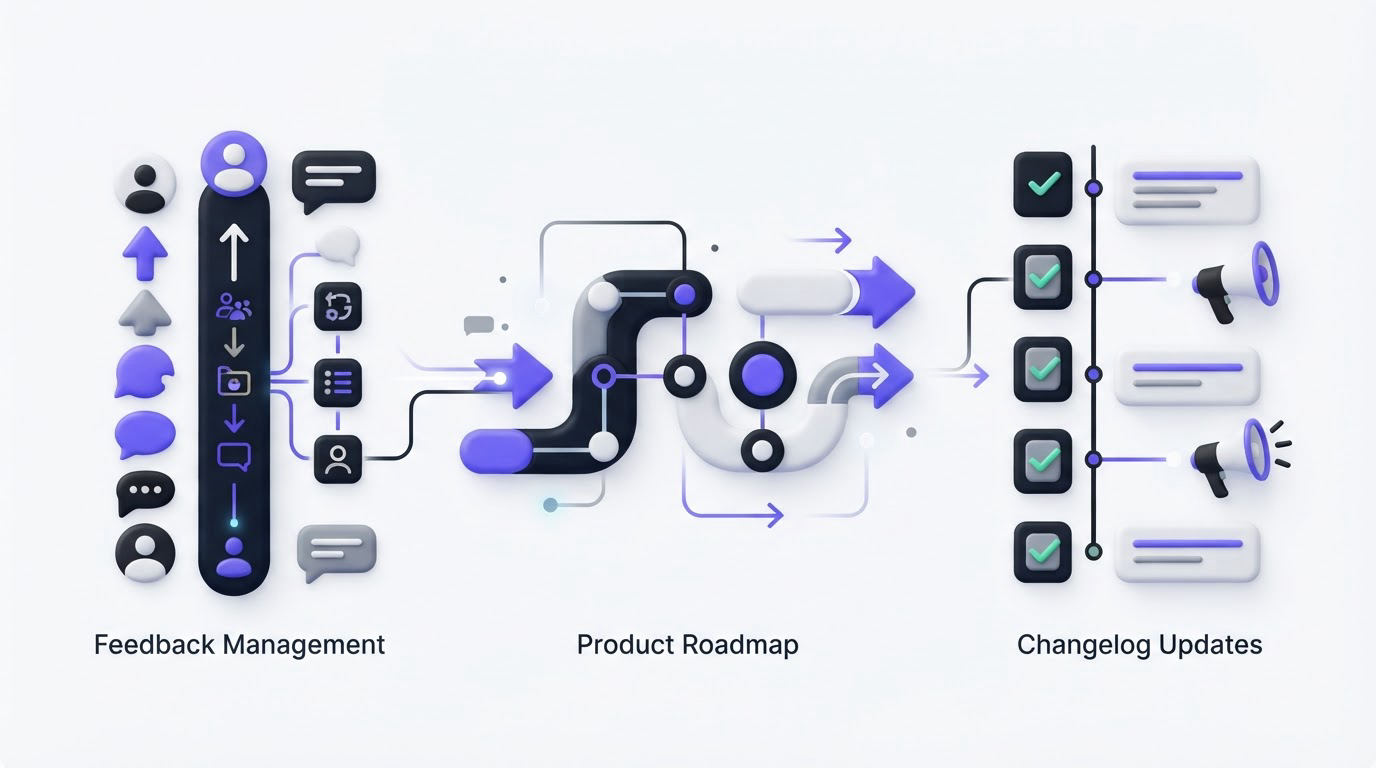
Feature requests arrive through support tickets, sales calls, Slack, and product conversations. Without a shared place to merge duplicates, see demand, and communicate decisions, the backlog becomes a collection of loud requests instead of useful product evidence.
Upvoty is a Canny alternative built for teams that want a connected feedback workflow: capture requests, organize them, prioritize work, publish a roadmap, and notify customers when work ships.
Quick answer: how to choose a Canny alternative
Use this workflow to evaluate and move to a new feedback platform:
- Export your existing posts, voters, statuses, and internal notes before starting the switch.
- Define the feedback board structure around product areas, customer segments, and submission rules.
- Import or recreate active requests, then merge duplicates into one canonical post per problem.
- Add ownership, priorities, tags, and segment context so product decisions have a clear record.
- Publish only the roadmap items your team is prepared to communicate publicly.
- Send changelog updates to voters when a request reaches completion.
What a useful Canny alternative needs to solve
A replacement should support the whole communication loop around a request. Voting is only one signal. Product teams also need context from the account, the requester's use case, duplicate demand, delivery status, and the ability to follow up after release.
Take a fictional B2B SaaS called AcmeOps. Its team uses feedback.acmeops.test for customer requests. A customer submits “CSV export for audit logs,” while another asks for “downloadable audit trail.” The initial mistake is treating these as two roadmap candidates. They describe the same underlying need.
The product manager merges both posts, keeps “Export audit logs” as the primary request, adds an Audit tag, assigns an owner, and records that enterprise accounts raised the issue during security reviews. The vote total remains useful, while the account context explains why the item deserves attention.
This is the standard to use when assessing any Canny alternative. Look for a system that keeps customer demand, team decisions, and public communication connected.
Compare a Canny alternative by the workflow your team runs
Start with the workflows your team needs to run every week. A feature list alone rarely shows where the manual work sits.
| Workflow requirement | What to test during evaluation | Upvoty approach |
|---|---|---|
| Collect requests | Can customers submit from a portal and inside the product? | Public or private boards, custom submission forms, and feedback widgets |
| Keep feedback clean | Can the team moderate, merge, tag, and add internal context? | Moderation, Smart Tags, internal notes, assignees, and priorities |
| Prioritize demand | Can you separate raw votes from account and segment context? | Segments, analytics, and organized board data |
| Share product direction | Can customers see a controlled view of planned and in-progress work? | Public roadmap pages with configurable visibility |
| Close the loop | Can voters receive updates when work ships? | Changelog publishing and automatic voter notifications |
| Connect delivery tools | Can product work stay linked to the tools the team already uses? | Jira, Linear, Slack, HubSpot, Intercom, Zapier, webhooks, and API options |
Ask each vendor to demonstrate these workflows using three real requests from your backlog. Include one duplicate, one request from a high-value segment, and one item already delivered. This quickly exposes whether the platform supports day-to-day product operations or simply hosts a voting page.
For a more detailed comparison of use cases, migration considerations, and platform fit, see Upvoty vs Canny.
How to migrate from Canny without losing feedback context
Export your data first. Save posts, vote counts, voter identity where permitted, comments, statuses, categories, and internal notes. Keep a local copy of the original export while you validate the new setup.
Next, reduce the backlog before import. Old requests often contain duplicates, outdated product ideas, or items already delivered. AcmeOps finds 14 separate posts related to audit-log export. The team combines them into one active post, archives requests for retired integrations, and creates a changelog post for the completed work.
Create clear board rules before inviting customers. For example, AcmeOps uses a public board for broad product ideas and a private board for enterprise security requests. Its public form asks for the problem being solved and the workflow affected. That produces better input than a single open text field.
If you process personal data in feedback submissions, set retention rules and restrict internal access. The GDPR’s data minimization principle supports collecting only the data required for the stated product purpose. Teams using SSO should also confirm identity behavior with their provider and the OpenID Connect Core specification.
Then redirect customers. Keep the previous portal available long enough to point visitors to the new location, update in-app links, and train support and sales teams to submit or link requests consistently.
Read the full feature request management workflow before moving a large backlog. It covers the operational decisions that keep a feedback board useful after launch.
How Upvoty works as a Canny alternative
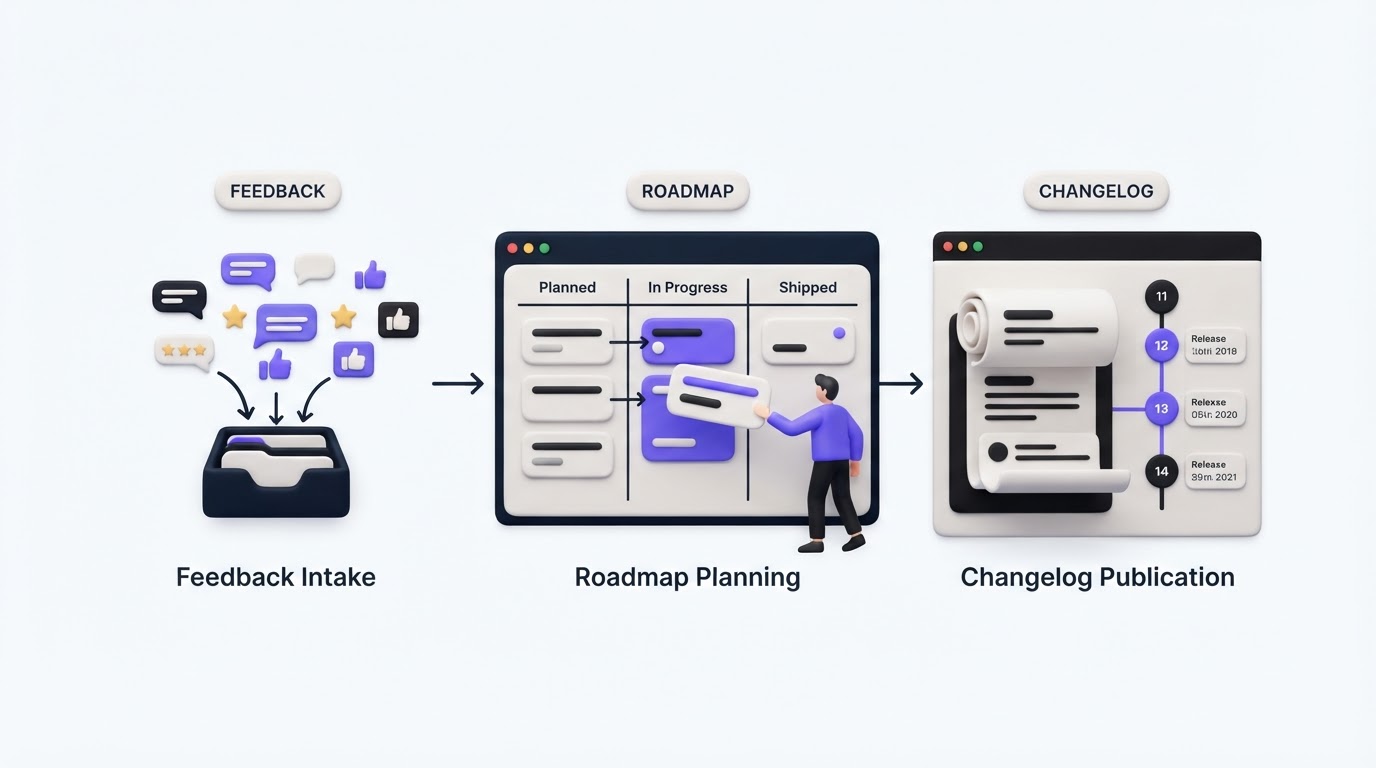
Upvoty gives teams one route from incoming request to customer update. Here is how AcmeOps would run its audit-log export request inside the product.
First, the team launches a branded feedback board and creates an “Audit and compliance” category. Customers submit ideas, vote on existing posts, and add comments rather than creating parallel requests.
!Public voting board for product feedback and feature requests
Next, a product manager reviews new submissions in the dashboard. They merge similar audit-export requests, add a Smart Tag, attach internal notes from sales calls, assign the item to the compliance product owner, and set its priority. Segment information helps the team see whether demand comes from trial users, smaller customers, or enterprise accounts.
When the item enters planning, the team moves it onto the public roadmap. AcmeOps publishes “Audit log export” as planned while keeping date commitments out of the post until engineering has scoped the work. Customers can see movement without being given a delivery date the team cannot support.
!Public product roadmap showing planned and in-progress work
After release, the team publishes a changelog update with scope details: CSV export, date filters, and role permissions. Automatic voter notifications let the people who supported the request know that the work is available.
That sequence reduces the repeated “Is this planned?” conversations that drain support, sales, and product time. Learn how to write updates people can use in this guide to closing the feedback loop with a changelog.
When Upvoty is the right Canny alternative
Upvoty suits SaaS teams that want a feedback system with public or private boards, roadmap communication, release updates, and operational controls in one product. It also fits teams that need to collect feedback inside their application through a feedback widget, then route it into the same prioritization process as portal submissions.
It is especially useful when customer-facing teams need visibility without direct access to the development backlog. Sales can link a prospect to the relevant board post. Support can direct customers to status updates. Product retains control over prioritization, wording, visibility, and release communication.
A simple voting board may suit a very small product with occasional requests. Teams with several customer segments, recurring duplicate submissions, or public roadmap expectations benefit from the fuller workflow. See how to make demand more actionable in the guide to prioritizing feedback by revenue, segment, and demand.
Common mistakes when switching from Canny
The first mistake is importing every historic post unchanged. Archive stale ideas and merge duplicate requests before customers arrive. A clean starting point creates better voting behavior from day one.
The second is publishing every internal roadmap item. Share themes and committed work that customers can reasonably interpret. Keep exploratory work private until the team has made a communication decision.
The third is treating vote totals as the complete prioritization model. AcmeOps gives the audit-export request attention because of its security-review impact and enterprise segment evidence, alongside customer demand. Capture that rationale in internal notes so the next reviewer can understand the decision.
The fourth is releasing work without a clear update. Add the changelog entry, explain what changed, and notify people who voted. Customers remember follow-through.
Frequently asked questions about Canny alternatives
Can I use Upvoty for a public feedback board?
Yes. Upvoty supports public and private feedback boards, letting you choose whether ideas are visible broadly or limited to a customer group, team, or invited users.
Does Upvoty include a product roadmap and changelog?
Yes. Teams can publish roadmap items to communicate product direction and use a changelog to announce completed work. Voter notifications help reconnect releases to the original request.
How should I prioritize requests after migrating?
Review vote demand alongside customer segment, account value, urgency, strategic fit, implementation scope, and support volume. Keep the reasoning attached to the request. Your future team members will need that context.
Can customers submit feedback from inside my product?
Yes. Use the in-app feedback widget to capture requests while a customer is in the relevant workflow. In-context submissions typically include more useful detail than a later survey response.
What should I prepare before a Canny migration?
Prepare a data export, a board structure, moderation rules, category names, status definitions, ownership rules, and a customer announcement. Test the complete workflow with a small group before redirecting your full customer base.
If your team needs more than a voting page, build the workflow around the full customer conversation: request, decision, roadmap status, and release update. Try Upvoty to create a feedback portal that keeps those stages connected.