
Feature requests often arrive through support tickets, sales calls, product chats, and a public board. When the team cannot connect those signals to a clear decision and a customer update, valuable requests sit unanswered and product planning becomes harder to explain.
Upvoty is a Sleekplan alternative built for teams that want one customer-facing feedback workflow, from request collection through roadmap status and changelog communication.
Quick answer: how to choose and move to a Sleekplan alternative
- Audit your current requests, voters, statuses, and feedback sources before changing tools.
- Export the data you need to retain and map each field to a new workflow.
- Create public or private feedback boards with clear categories, moderation rules, and submission forms.
- Prioritize requests using vote context, customer segment, business impact, and product effort.
- Publish roadmap progress and send changelog updates to the people who supported each request.
What to look for in a Sleekplan alternative
A useful replacement has to support the full lifecycle of a request. Customers need an easy place to submit and vote. Product teams need context for decisions. Stakeholders need a roadmap that sets expectations. Customers who shared input need a clear update when work ships.
Look closely at these capabilities during evaluation:
- Public and private feedback boards for different audiences
- Moderation, duplicate handling, and internal notes for clean request data
- Segments and tags that show which customer groups need a feature
- Roadmap views that communicate progress at the right level of detail
- Changelog posts and voter notifications that complete the feedback loop
- Integrations with the issue tracker and communication tools your team already uses
The core question is whether the tool helps your team act on feedback consistently. A board full of votes can still leave product managers guessing when it lacks account context, ownership, and a visible next step.
| Evaluation area | Questions to ask during a migration | Why it affects product decisions |
|---|---|---|
| Feedback intake | Can users submit ideas in-app, on a portal, or through a dedicated board? | Collection methods determine whose feedback reaches the product team. |
| Request quality | Can your team merge duplicates, moderate posts, and add internal context? | Cleaner data prevents one request from appearing more important than it is. |
| Prioritization | Can you segment voters and assign owners or priorities? | A request from key accounts may need a different response than broad low-intent demand. |
| Customer visibility | Can you publish a roadmap and changelog with controlled detail? | Customers can see progress and understand when plans change. |
| Workflow fit | Does the platform connect with tools such as Jira, Linear, Slack, or Intercom? | Handoffs stay visible across product, support, and engineering. |
How to move from Sleekplan to a new feedback workflow
Start with a short audit. Export the last 90 days first, then review older requests that still influence the roadmap. Record request titles, descriptions, vote counts, customer details, statuses, tags, internal comments, and links to any engineering work.
Use a field-mapping sheet before moving records. For example, a SaaS team called Northstar Inbox might have a popular request called “Support shared inbox assignment rules.” Its exported vote total has value, yet the team also needs to know that several votes came from its enterprise segment and that an existing Jira epic covers part of the request.
Northstar Inbox creates one consolidated request in the new board, attaches the relevant internal context, and links it to the engineering work. That avoids splitting demand across near-identical posts such as “routing rules,” “automatic assignment,” and “team inbox rules.”
Preserve links to source tickets where possible. Keep a simple redirect plan for old public-board URLs, and tell customers where to find the new portal. If your old tool supports exports with voter relationships, confirm how those records will be handled before announcing the move.
For teams using Jira, define the handoff rules first. Decide which feedback status triggers an issue, who creates it, and which product status appears publicly. Jira’s own documentation on issue types can help teams keep the engineering side of that mapping consistent.
How to set up feedback boards that produce useful requests
A new board needs structure from day one. Create categories that match actual product areas, such as Reporting, Integrations, User Management, and Mobile. Broad catch-all categories fill quickly and make filtering difficult for customers and your team.
Northstar Inbox places “Support shared inbox assignment rules” in its Workflow Automation category. A custom submission form asks which inbox type the requester uses, how many teammates are affected, and what they do today. Those answers turn a vague idea into a usable product signal.
Set moderation ownership before launch. One product owner or support lead should review incoming posts, merge duplicates, clarify unclear requests, and assign an initial status. Read Public Feedback Boards: What to Share, Moderate, and Keep Private for practical guidance on deciding which requests belong in a customer-visible space.
Use an in-app entry point for feedback at the moment customers experience the product. The in-app feedback widget guide explains how to place that entry point without interrupting core tasks.
Feedback forms also need accessible labels, clear instructions, and visible error messages. Follow the W3C guidance for accessible forms when configuring customer-facing submission flows.
How to prioritize feedback after switching from Sleekplan
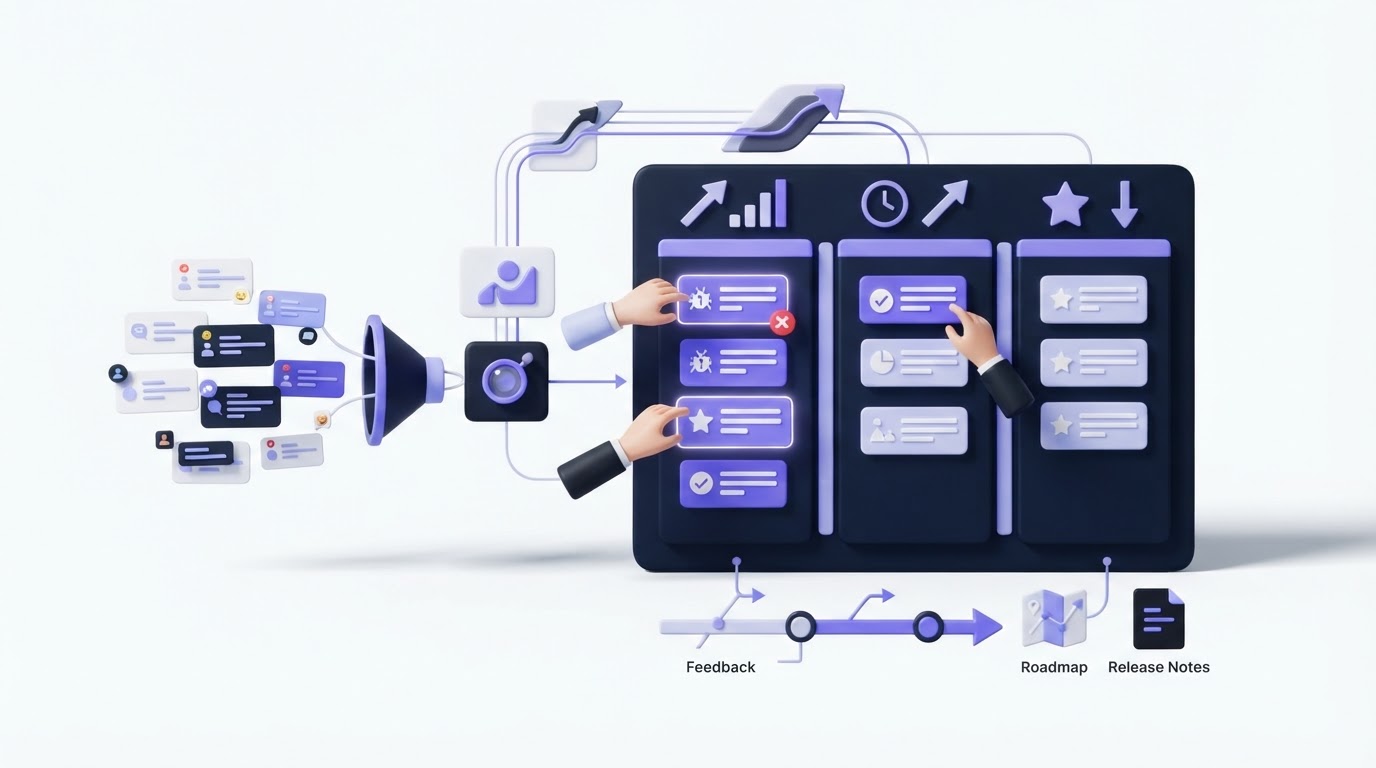
Vote totals show interest, though they rarely provide a complete priority order. Review the customer segment, recurring pain point, strategic fit, revenue exposure, engineering dependency, and confidence in the evidence.
For Northstar Inbox, the assignment-rules request has 24 votes. Six are from customers on its enterprise plan, while several smaller requests have similar counts from trial users. The product lead marks the request as high priority, assigns an owner, and keeps it in “Planned” until engineering confirms the scope. That status gives customers a credible signal without promising a release date too early.
Use a recurring review cadence. Product, support, and sales should review new and high-impact requests together every two weeks. This catches duplicate demand hidden in different channels and makes the reason behind a status change easier to explain.
For a deeper framework, see how to prioritize customer feedback by revenue segment and demand. The goal is a decision record your team can revisit when priorities shift.
How Upvoty works as a Sleekplan alternative
Upvoty brings collection, organization, prioritization, and communication into one sequence that product teams can manage day to day.
First, create feedback boards for public ideas, customer-only requests, or internal input. Configure the board structure, control visibility, and guide people toward useful submissions. Teams can also use the feedback widget to collect input inside the product.
Next, review requests in the dashboard. Merge related submissions, add tags, segment the feedback, assign ownership, and use internal notes for context that customers should not see. Upvoty’s moderation tools help keep the public board clear as demand grows.
This dashboard view shows where feedback management happens:
!Upvoty dashboard for managing customer feedback, requests, and priorities
Then publish the appropriate status on your product roadmap. Northstar Inbox can show “Planned” for assignment rules while retaining internal delivery details. A clear public roadmap gives customers enough visibility to understand direction while product teams maintain control over commitments.
Finally, publish a changelog entry when the feature ships and notify the people who voted. The request moves from a customer signal to a closed loop. Learn how that communication reduces repeat questions in How to Close the Customer Feedback Loop with a Changelog.
Common mistakes when choosing a Sleekplan alternative
The most common failure starts with importing every historical request unchanged. Old boards often contain duplicate ideas, expired needs, and posts without enough detail to support a decision. Archive low-value records and consolidate active demand before launch.
Another issue is publishing roadmap dates before engineering has validated scope. Use simple stages such as Under Review, Planned, In Progress, and Released. Add dates only when the delivery team has confidence in them.
Teams also lose trust when they collect votes but leave customers without updates. Create an owner for status changes and changelog publishing. Building a public product roadmap customers trust covers how to share progress without creating commitments your team cannot keep.
FAQ
Is Upvoty a good Sleekplan alternative for SaaS companies?
Upvoty suits SaaS teams that want customer feedback boards, in-app collection, prioritization context, public or private roadmaps, and changelog communication in one product workflow. Review the Upvoty features alongside your existing process to confirm the fit.
Can I keep some feedback private while sharing a public roadmap?
Yes. Keep internal feedback and sensitive customer requests in private spaces, then publish customer-safe roadmap statuses externally. This gives product teams room for candid discussion while customers can still follow progress.
How should I announce a feedback portal migration?
Send a short message to active voters and add a notice on the old board. Explain the new portal URL, the date of the move, and where customers can find existing ideas. Pin a post that directs users to the new location for several weeks.
Should feature votes decide the roadmap?
Votes are one input in prioritization. Combine them with segment data, strategic fit, support burden, implementation effort, and dependencies. That produces decisions your team can explain to customers and leadership.
If your team needs a Sleekplan alternative that connects feedback collection to visible product follow-through, explore Upvoty. Set up the workflow around your real product decisions, then give customers a clear place to contribute and see progress.