The Founder’s Time Trap: How to Get Back to Talking to Your Users

There was a time when you knew your users by name. You knew what made them sign up, what nearly made them walk away, and the exact words they used to describe the problem you were solving for them. Then the product grew, and somewhere between hiring, invoicing, and a calendar that seems to fill itself, those conversations got quieter.
Now you’re making product calls based on what customers told you six months ago, and if you’re honest, you’re not certain that picture still holds. The strange part is that nothing feels wrong while it’s happening. You’re busier than ever, the numbers are mostly up and to the right, and the silence from your users reads like everything’s fine.
This is the founder’s time trap, and almost every growing product walks into it. The habit that builds a company in year one, talking to users constantly, is usually the first thing to get squeezed out in year two.
How founders drift away from their users
The drift is rarely a decision, with nobody waking up and choosing to stop listening to customers. It happens one small trade-off at a time. A support fire needs putting out, so the user interview gets bumped to next week. An investor update is due, so the feedback inbox waits. Each swap feels sensible on the day it’s made, and the cumulative effect over a few months is that capturing the voice of your customers slips from a weekly habit to an afterthought you feel vaguely guilty about.
It gets harder as you grow, not easier. New layers appear between you and the person actually using the product: a support team, a sales team, a couple of managers. Each one is useful on its own, and together they can quietly turn talking to a customer into a scheduled, sign-off-heavy event rather than the casual habit it used to be. The further you sit from the raw conversation, the more your sense of the user arrives secondhand, filtered and summarized, with the surprising details already sanded off.
Dashboards make the distance easy to ignore. Charts move in the right direction, activation ticks up, churn holds steady, and it all feels like proof that you know what’s happening. However, it’s a metric telling you what changed, not why, and the why is the part that lives in the messy sentences customers use when you let them talk. A founder who only reads the numbers can be completely current on what users do, while months behind on what they actually want.
Why the drift costs more than you think
When you stop hearing users in their own words, your instincts quietly go out of date. You begin defending features from memory rather than evidence, and the roadmap drifts toward what’s convenient to build instead of what people actually need. That gap is more dangerous than it sounds. When CB Insights went through hundreds of failed startups to work out what killed them, the most common root cause was poor product-market fit, building something the market didn’t want badly enough, cited in more failures than running out of money. Losing touch with your users is how a company ends up on the wrong side of that number.
There’s a subtler cost as well. The exact words your customers use are the same words that make your marketing land and your onboarding click. When you lose regular contact with them, your product language slowly drifts toward how you talk about the product internally, which is almost never how a new user thinks about their problem. The copy gets a little more abstract, the onboarding assumes a little more, and conversion softens in ways no single dashboard will pin on the real cause.
The admin that crowds out those conversations carries its own quieter bill. Every time you jump from a customer call to an invoice to a hiring thread, your brain pays to reload the new task, and that reset isn’t free. Microsoft’s 2025 workplace research found that the average worker now gets pulled away by a meeting, email, or message roughly every two minutes during core hours, which leaves almost no room for the sustained thinking that real product work needs. So the busy work does more than fill your day. It drains the exact focus you’d need for the high-value thinking that only you can do, which makes the customer work even harder to get back to.
How to get back in front of your users
Reversing the drift doesn’t call for a reorganization. It calls for protecting a small amount of time and refusing to let anything move it.
Protect one conversation a week
Start with a standing weekly slot for one customer conversation, and guard it like a meeting with your biggest investor. It does not get rescheduled, or filled with anything else. Keep the format light: a thirty-minute call, a few open questions about what they were trying to do and where the product got in the way, and no script that nudges them toward the answer you’re hoping for. Record it if they’re happy for you to, and drop three or four of their exact phrases into a shared channel afterward, so the whole team hears the user in their own words rather than your summary of them. A single conversation a week is enough to keep your read on the user current, and the cadence matters far more than the length of any one call.
Let feedback collect itself
Next, take yourself out of the collection process. Feedback shouldn’t depend on you remembering to chase it down. Route it through a system that gathers requests, tags them, and surfaces the patterns automatically, so the signal reaches you without another job landing on your desk. The point is to stop treating feedback as something you occasionally go digging for and start treating it as a stream that’s always running in the background, ready whenever you are.
Clear the admin off your plate
Then clear the work that’s crowding your calendar to begin with. A large share of what eats a founder’s week, inbox triage, scheduling, chasing paperwork, data entry, doesn’t genuinely need the founder at all. Founders who delegate the routine admin to a virtual assistant service like Time etc often find the first thing they recover is precisely the time they’d lost for customer conversations, the one part of the job nobody else can do for them. It’s a small handoff that pays back directly in product insight.
Turn the conversations into roadmap decisions

Talking to users only helps if what you hear actually changes what you build. The trap on the other side of reconnecting is drowning in raw requests and treating every one as a to-do, which is how roadmaps end up as a long, unfocused wish list that pulls the team in ten directions at once.
Group requests into themes
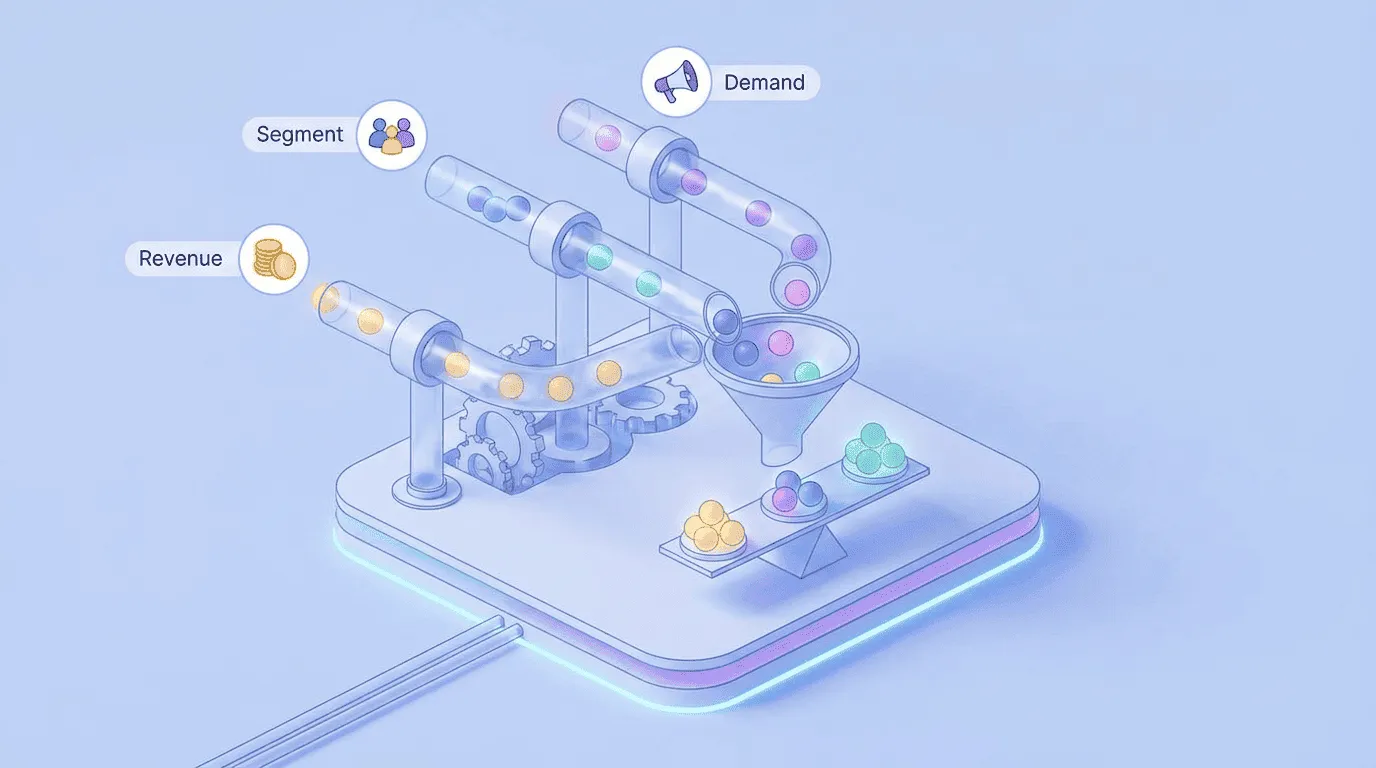
Sort what you hear by theme rather than by volume. Ten customers describing the same friction in ten different ways is a pattern worth acting on, while a single loud request for a niche feature usually isn’t, however persuasive the person making it. Then weight those themes by who’s raising them and what they’re worth, so a recurring problem from the segment you most want to grow counts for more than a one-off from a user who was never going to stay. That weighting is what turns a pile of comments into an ordered set of decisions you can defend.
Ensure your priorities remain visible
Keep that ordered list somewhere the whole team can see, not buried in your own notes. When the reasoning behind what’s in and what’s out is visible, the debates get shorter and the people closest to the work stop guessing at what matters most. It also makes the next round of conversations sharper, because you walk in already knowing which open questions you’re trying to answer and which assumptions you most need to test.
Be comfortable saying no
Saying no is part of the job. Every request you take on is time taken from another, and a roadmap that tries to please everyone tends to move the core product forward at a crawl. The founders who stay close to their users get better at this over time, because hearing the problem underneath a request often points to a simpler fix than the specific feature someone asked for. You can only make that call if you’ve actually heard the problem in the first place, which is the whole reason the weekly conversation earns its place on the calendar.
Make it a habit, not a one-off
The founders who stay close to their users treat it as a rhythm rather than a rescue mission. A single burst of interviews before a launch fades within weeks. A steady weekly cadence compounds, because each conversation builds on the last and you start spotting shifts in what people want before they show up in the churn numbers.
The loop only pays off if you close it. When a user’s request turns into a shipped feature, tell them about it. Closing the customer feedback loop turns a quiet suggestion box into a genuine back-and-forth, and it gives people a reason to keep bringing you their problems.
Getting back in front of your users does more than tidy your schedule. It returns you to the thing that made the product worth building in the first place. Protect the hour, clear the noise around it, and the conversations that got you this far are the ones that will carry you forward.